
Childhood
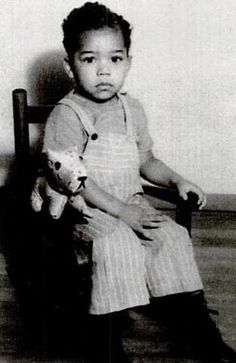
Hendrix's background was characterized by adversity-- poverty, racial prejudice, parental divorce, and the virtual emotional abandonment by his mother in early childhood, followed by her death when he was fifteen. Jimi’s first memory was connected to an astonishing sonic and visual display, filling his young ears and eyes. His fascination with the mystical, the spiritual, the science fictional, flowered in the wildly imaginative drawings he made as a schoolboy and, inevitably, in the music he created, which transcended genres and expanded the horizon of rock music.
Jimi and Leon had one younger brother, Joseph, and two sisters, Cathy and Pamela. All three younger siblings had health problems and were given up to foster care. Like his mother Lucille, Al’s drinking and pursuit of the opposite sex caused him to be absent from the house for days on end. His chronic underemployment, coupled with gambling, kept the three male Hendrix's enmeshed in poverty, and Jimi took the responsibility for the care of his younger brother.
This struggle for survival included the boys scrounging meals where they could from understanding, kind neighbors. Sometimes, unpaid bills meant Jimi and Leon woke up alone in a cold, dark house. The shy, soft-spoken Jimi, who stuttered at an early age, once walked with his little brother into a Seattle Safeway supermarket. He surreptitiously opened a package of white bread, took out two pieces, and resealed the bag. He led Leon to the cold cuts section, opened a package of bologna, took out one slice, placed it between the two pieces of bread, and closed the package. Jimi not only helped raise Leon, but he also shared his own passion for music and art with his little brother. Jimi’s artistic ability was exceptional, his drawings of soldiers fighting, cowboys and Indians clashing, and distant planets orbiting in space showed skills well beyond average. Jimi fell in love with the science fiction world of Flash Gordon and earned the nickname “Buster,” after the serial’s star, Buster Crabbe.
On February 1, 1958, Lucille Jeter Hendrix was found unconscious in the back alley of a bar on Yesler Street. She died of a ruptured spleen, a treatable condition and one that was more likely to have been caused by violence than alcohol consumption. She was only thirty-three. Al Hendrix did not take the boys to Lucille’s funeral. Instead, he gave the children shots of his Seagram’s 7 whiskey and told them that was how men dealt with their grief.
Jimi was so desperate to play guitar that when he was at Horace Mann Elementary School in Seattle, he brought a broom to school regularly, keeping it close to him, as a younger child might cling to a blanket. A social worker tried, after a year of this pitiable behavior, to get funds to buy Jimi a guitar. She wrote a note, insisting that not providing the boy a guitar might result in psychological damage. But the school did not think a boy humming and treating a broom like a guitar in a public school indicated any kind of mental imbalance.
One night, Al was playing cards with a male friend who had an acoustic guitar. Jimi sometimes quietly brought it out onto the front porch and carefully explored its strings and neck. On that night, Al’s friend drunkenly decided to sell it for five dollars to satisfy the boy who was so fascinated by it. But Al again cried poverty and said he could not spare the money, waving away the offer. But Ernestine Benson, who was present, sprang to Jimi’s defense. It was Ernestine who played old 78 rpm records that captivated Jimi, including the blues of Muddy Waters (McKinley Morganfield), Howlin’ Wolf (Chester Arthur Burnett), Robert Johnson, and others. Ernestine laid into Al, yelling, finally demanding, “Al Hendrix, you’re going to buy this guitar for five dollars!” That acoustic guitar, Jimi’s first real guitar, would be so dear to him that he carried it everywhere, played it constantly, even slept with it on his chest.
Being left-handed, he had to reverse the order of the strings on a right-handed guitar because left-handed models were hard to find and more expensive. His father disapproved of Jimi playing lefthanded, calling it the Devil’s work. So Jimi simply chose the most logical solution to the problem: He learned to play right-handed guitars upside down without changing the strings. By his late teens, Jimi was playing in local bands. First, it was the Velvetones and the Rocking Kings, followed by Thomas and the Tomcats. He practiced every spare moment he had, even if some of his strings were broken. When he didn’t have his guitar with him, he pretended he did.
Jimi, introverted, fearful of his future, never able to bring friends over to his house, was bullied by some of the boys, who saw him as peculiar and aloof. Once, friends saw Jimi chased across a football field by a boy he would not let hold his guitar. Eventually, Jimi was knocked to the turf, punched, and kicked. He suffered the blows, rather than releasing the guitar and risking damage to it. In spite of the indignities Jimi faced, his mind craved new musical experiences.
He listened to Seattle’s two black radio stations, KFKF and KZAM. They played many of the top R&B and soul hits. Jimi’s early interest in John Lee Hooker, B. B. and Albert King, and other bluesmen now incorporated rock-and-roll acts such as Fats Domino, Chuck Berry, and Little Richard.
Military Experience
In May 1961, the Seattle police department was investigating black youths during a crime wave that involved seventeen homes and $2,500 worth of goods and cash stolen. On May 2, police spotted a car full of young Negroes having too good a time on a Tuesday night. Jimi was arrested, along with three other boys, for riding in a stolen car. As a result, he spent the day confined in the Rainier Vista 4-H Youth Center and then was released to his father. As a young man, Al had been arrested in a similar incident. So when Jimi claimed he had no idea the car was stolen, his father was very understanding. However, just three days later, Jimi was arrested again under the same circumstances.
This time, after seven days locked up in Rainier Vista, he faced a judge. During Jimi’s incarceration, Seattle police nabbed six teens who were part of the home burglary ring. Still, during his hearing on May 16, Jimi had a tough choice to face. After listening to the plea bargain from the public defender assigned to Jimi’s case, the judge suspended Jimi’s two-year sentence with the stipulation that the young man immediately enlists for military duty. The two “taking and riding” charges, however, remained on his permanent record.
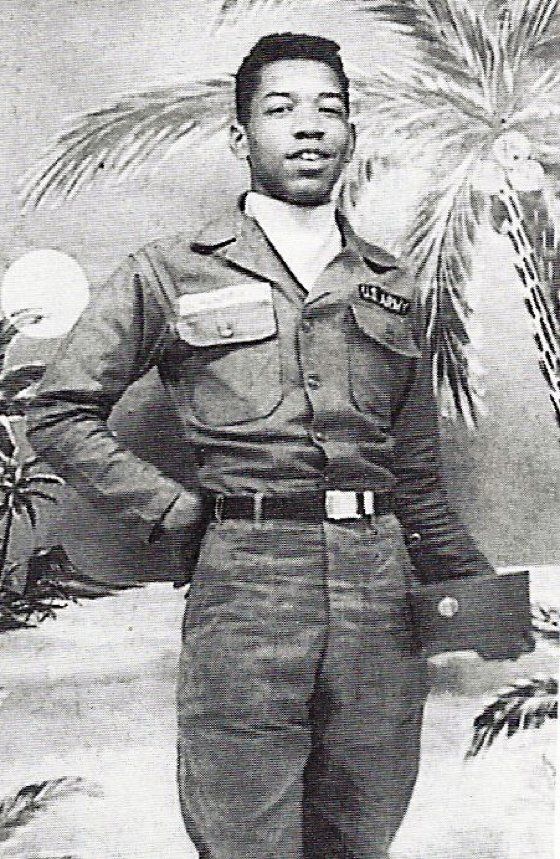
In June 1961, Jimi began his army basic training at Fort Ord, California. It seemed very likely that Jimi would eventually see military action when he completed his training as a paratrooper and member of the 101st Airborne. His choice to join the military rather than go to jail came at a time when the United States was committed to stopping the spread of communism in the world and strongly reacting to perceived threats to itself and its allies in numerous global hotspots.
On January 11, 1962, Major General C. W. G. Rich awarded Jimi the famed 101st Division Screaming Eagles patch he desired. “I made it in eight months and eight days,” Jimi handwrote his father.
Jimi, who had dropped out of Garfield High, was required to take General Education Development (GED) tests, and by the end of the month, he was promoted to private first class (PFC). What still mattered most to PFC Hendrix were his music and the guitar that was over 2,400 miles away at Betty Jean Morgan’s house in Seattle.
On Friday, February 16, 1962, Captain Gilbert Batchman requested a physical and psychiatric examination of Hendrix. Batchman’s report concluded: “Individual is unable to conform to military rules and regulations. Misses bed check; sleeps while supposed to be working; unsatisfactory duty performance. Requires excessive supervision at all times. Was caught masturbating by a member of the platoon.” Board proceedings were then ordered for Jimi, who signed a statement declining counsel. He did not submit any statement on his own behalf. Private First Class Hendrix was advised that he might receive a discharge as a result of the board’s findings.
The following day, Jimi’s platoon sergeant, James C. Spears, filed another damning report: “He has no interest whatsoever in the Army. . . . It is my opinion that Private Hendrix will never come up to the standards required of a soldier. I feel that the military service will benefit if he is discharged as soon as possible.” Jimi’s days in the army were numbered. The papers in his file were overflowing. Exactly one year after Jimi enlisted, Captain Gilbert Batchman filed a request for discharge to the commanding officer of the 101st Airborne Division. The request included seven signed statements, a record of previous convictions, a record of time lost, a request for physical and psychiatric examination, and Jimi’s punishment record in his unit.
On June 29, 1962, Jimi was approved for an honorable discharge from the army for “unsuitability.”
Early Music
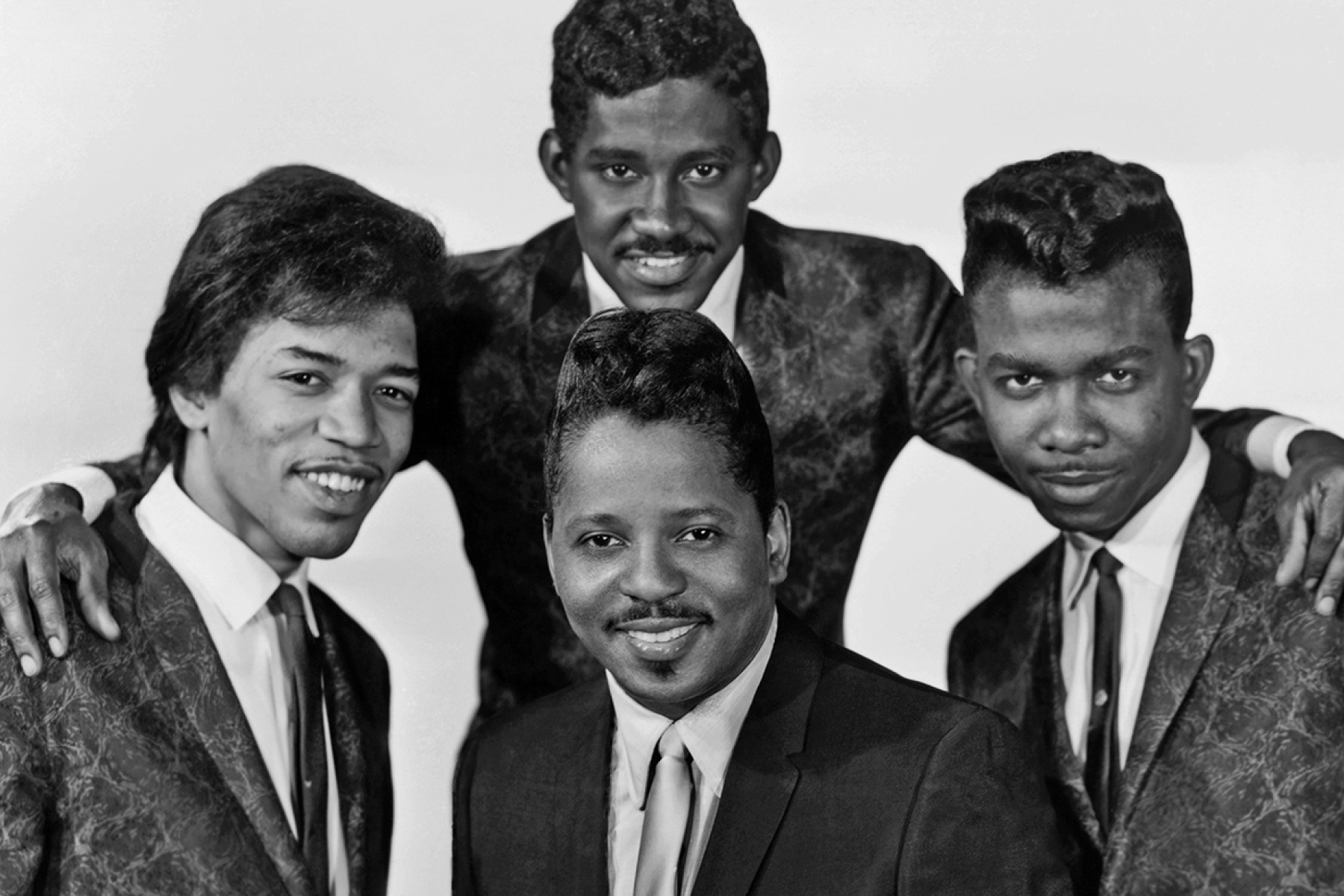
After fellow serviceman Billy Cox was discharged from the Army, he and Hendrix moved about 20 miles across the state line from Fort Campbell to Clarksville, Tennessee. There they formed a band, the King Kasuals. In Seattle, Hendrix saw Butch Snipes play with his teeth. Not to be upstaged, Hendrix also learned to play in this way. He later explained: “The idea of doing that came to me... in Tennessee. Down there you have to play with your teeth or else you get shot. There’s a trail of broken teeth all over the stage.”
Although they began playing low-paying gigs at obscure venues, the band eventually moved to Nashville's Jefferson Street, which was the traditional heart of the city’s black community and home to a thriving rhythm and blues music scene. They earned a brief residency playing at a popular venue in town, the Club del Morocco, and for the next two years, Hendrix made a living performing at a circuit of venues throughout the South that were affiliated with the Theater Owners’ Booking Association (TOBA), widely known as the chitlin' circuit. In addition to playing in his own band, Hendrix performed as a backing musician for various soul, R&B, and blues musicians, including Wilson Pickett, Slim Harpo, Sam Cooke, Ike & Tina Turner, and Jackie Wilson.
In January 1964, Hendrix felt like he had outgrown the circuit artistically, and frustrated by having to follow the rules of bandleaders, so he decided to venture out on his own. He moved into the Hotel Theresa in Harlem, where he befriended Lithofayne Pridgon, known as “Faye”, who became his girlfriend. As a Harlem native with connections throughout the area's music scene, Pridgon provided him with shelter, support, and encouragement. In February 1964, Hendrix won first prize in the Apollo Theater amateur contest. Hoping to secure a career opportunity, he played the Harlem club circuit and sat in with various bands. At the recommendation of a former associate of Joe Tex, Ronnie Isley granted Hendrix an audition that led to an offer to become the guitarist with the Isley Brothers’ back-up band, the I.B. Specials, which he readily accepted.
In March 1964, Hendrix recorded the two-part single “Testify” with the Isley Brothers and released it in June, it failed to chart. In May, he provided guitar instrumentation for the Don Covay song, “Mercy Mercy”. Issued in August by Rosemart Records and distributed by Atlantic, the track reached number 35 on the Billboard Charts.
Hendrix toured with the Isleys during much of 1964, but near the end of October, after growing tired of playing the same set every night, he left the band. Soon afterward, Hendrix joined Little Richard's touring band, the Upsetters. During a stop in Los Angeles in February 1965, he recorded his first and only single with Richard, “I Don't Know What You Got (But It's Got Me)”, written by Don Covay and released by Vee-Jay Records. Richard's popularity was waning at the time, and the single peaked at number 92, where it remained for one week before dropping off the chart. Hendrix met singer Rosa Lee Brooks while staying at the Wilcox Hotel in Hollywood, and she invited him to participate in a recording session for her single, which included the Arthur Lee penned “My Diary” as the A-side and “Utee” as the B-side. Hendrix played guitar on both tracks, which also included background vocals by Lee. The single failed to chart, but Hendrix and Lee began a friendship that lasted several years; Hendrix later became an ardent supporter of Lee’s band, Love.
In July 1965, Hendrix made his first television appearance on Nashville’s Channel 5 Night Train. Performing in Little Richard’s ensemble band, he backed up vocalists Buddy and Stacy on “Shotgun”. The video recording of the show marks the earliest known footage of Hendrix performing. Richard and Hendrix often clashed over tardiness, wardrobe, and Hendrix’s stage antics, and in late July, Richard’s brother Robert fired him. On July 27, Hendrix signed his first recording contract with Juggy Murray at Sue Records and Copa Management. He then briefly rejoined the Isley Brothers, and recorded a second single with them, “Move Over and Let Me Dance” backed with “Have You Ever Been Disappointed”. Later that year, he joined a New York-based R&B band, Curtis Knight and the Squires, after meeting Knight in the lobby of a hotel where both men were staying. Hendrix performed with them for eight months. In October 1965, he and Knight recorded the single, “How Would You Feel” backed with “Welcome Home”.
Despite his two-year contract with Sue, Hendrix signed a three-year recording contract with entrepreneur Ed Chalpin on October 15. While the relationship with Chalpin was short-lived, his contract remained in force, which later caused legal and career problems for Hendrix. During his time with Knight, Hendrix briefly toured with Joey Dee and the Starliters, and worked with King Curtis on several recordings including Ray Sharpe’s two-part single, “Help Me”. Hendrix earned his first composer credits for two instrumentals, “Hornets Nest” and “Knock Yourself Out”, released as a Curtis Knight and the Squires single in 1966.
Feeling restricted by his experiences as an R&B sideman, Hendrix moved in 1966 to New York City’s Greenwich Village, which had a vibrant and diverse music scene. There, he was offered a residency at the Cafe Wha? on MacDougal Street and formed his own band that June, Jimmy James and the Blue Flames, which included future Spirit guitarist Randy California. The Blue Flames played at several clubs in New York and Hendrix began developing his guitar style and material that he would soon use with the Experience. In September, they gave some of their last concerts at the Cafe au Go Go, as John Hammond Jr.’s backing group.
Today
Despite the rejection and setbacks he experienced in his early career, he maintained belief in his future as a musician. He continued to dreamed of being a professional musician, playing his own music, required persistence and faith in his own abilities. He recalls the struggle of working on and off in New York in 1964: "I'd get a gig once every twelfth of never. Sleeping outside between them tall tenements was hell. Rats running all over your chest... I even tried to eat orange peel and tomato paste".
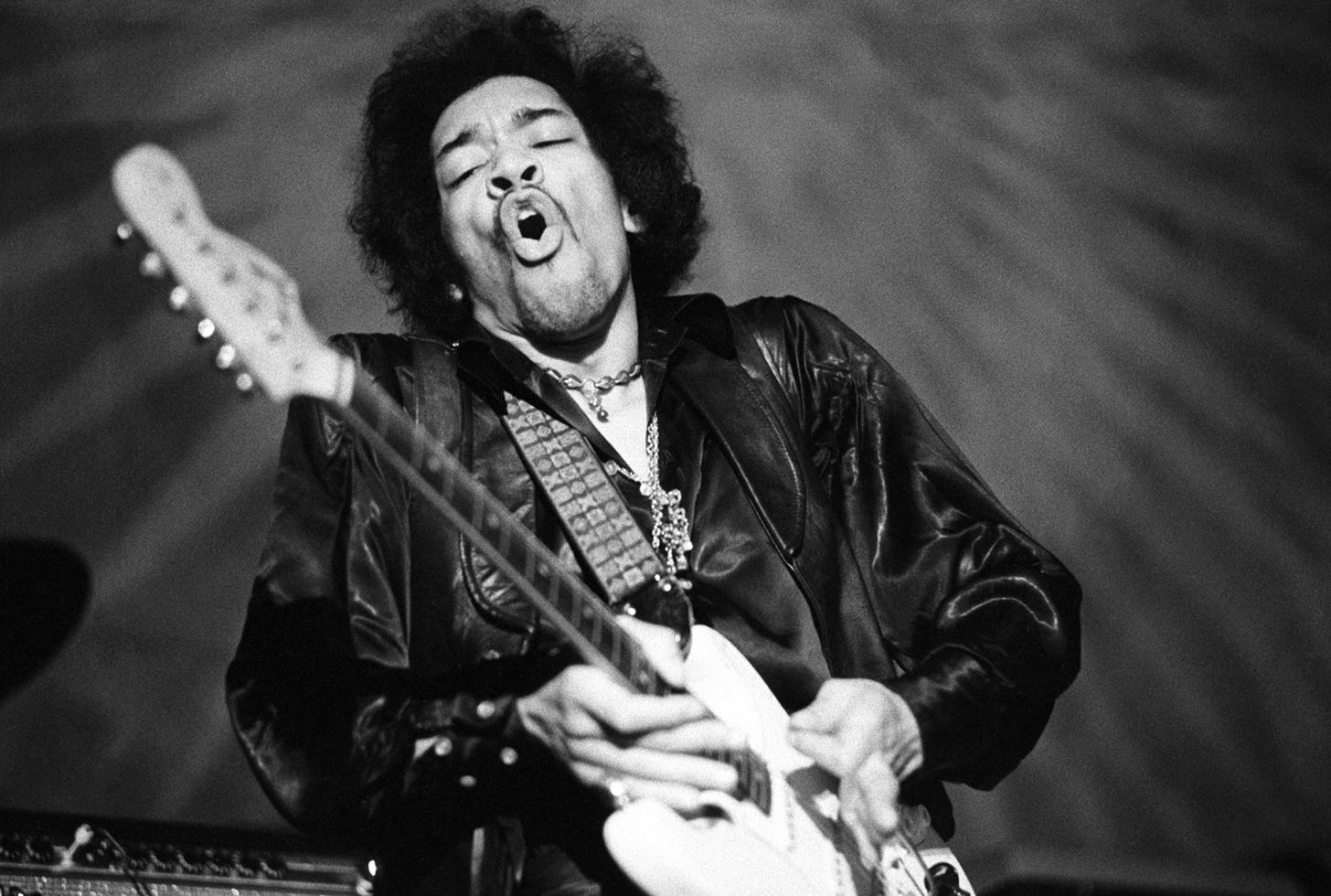
The whole man vibrates with feeling like a perfectly tuned string. Many people who have seen the live performances of Jimi Hendrix are amazed by the unity of musical content, visual appearances, and the feeling of mastery and freedom that is conveyed just by watching him play. Hendrix has crossed musical boundaries, and musicians from a range of genres are able to relate to his music. Popstar and avant-garde musician Brian Eno asked why Hendrix is not considered "one of the century's great composers?" Some say that Hendrix even "single-handedly shifted the whole course of guitar-playing".
He shows a range of the sensory, emotional, intellectual, and imaginational over-excitabilities that are described as evidence of developmental potential. These include extreme sensitivity and emotional responsiveness to stimuli such as sound and color; tendency to introspection, intellectual preoccupation and daydreaming; capacity for fantasy and invention from childhood; elaborate dreams and strong visual recall; and a focus on moral and spiritual concerns.
Jimi Hendrix also displays a high level of spiritual aspiration, seeing music as a spiritual experience and a vehicle for opening up his audience to a higher level of awareness. He feels an obligation to continue conveying his spiritual message through performance despite the build-up of personal and career stresses that drained his creative energy and threatened his health.